Mairu-beso infant bone arm
Legado en los huesosThe Mairu-beso infant bone arm is a fragment of a dead child’s skeleton associated with beliefs about unbaptized infants and the unsettled boundary between the living and the dead. In the investigation, the term names a burned arm-bone relic displayed at the altar of Arizkun Church; elsewhere, a child buried beneath the eaves of a family house is found with the right arm forcibly removed. These discoveries make the object more than a macabre curiosity: it carries the weight of local belief, religious exclusion, desecration, and a family secret that the surviving records cannot fully resolve.
Form and Discovery
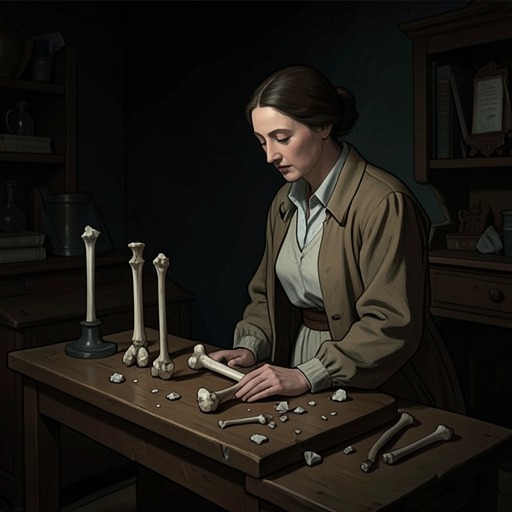
The buried child is found beneath a house’s eaves, in a grave located by following the line where rainwater has marked the ground. The excavator removes the soil in thin layers, first uncovering scraps of blackened, rotting cloth. Beneath them lies what remains of a cradle blanket and a waxed cloth wrapping, whose discarded cord has left a deep impression. The infant’s bones and the wrapping are well preserved, though stained by the dark soil of Baztán.
The body lies face down, as if asleep in the earth. The person disturbing the grave presses its small chest against the ground and tears off the right arm; the tiny clavicle breaks with a faint sound. The bones are taken beneath the person’s clothing, and the disturbed earth is pushed back into the grave. The careful unwrapping, the bodily force used to remove the arm, and the hurried concealment of the bones establish a deliberate act of exhumation and theft. The scene does not identify the perpetrator or establish the arm’s later destination, so the grave find and the church relic must not be treated as conclusively the same object.
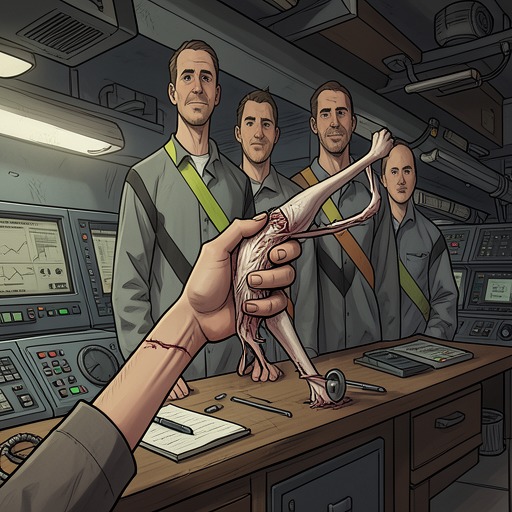
A separate discovery at the altar brings the name Mairu-beso into the investigation. Inspector Iriarte lifts a sheet to reveal a dry yellow bamboo sliver, burned at one end. Doctor San Martín identifies the find as a Mairu-beso; lifting the covering further reveals broken bamboo pieces and the tiny bones of a hand. Amaia Salazar recognizes that the remains belong to a child, and San Martín estimates that the skeleton is probably that of an infant less than a year old. Jonan Etxaide agrees with the identification and explains the belief that gives the relic its name.
Belief and Use
According to Jonan Etxaide, a Mairu-beso must come from an infant who died without baptism. In older beliefs, such an arm could be carried like a torch to protect its bearers. Its smoke was thought capable of putting the inhabitants of a house—or even a whole village—to sleep while the bearers carried out their misdeeds. The bamboo and burned remains at the altar give the find a physical presentation consistent with the idea of a torch, though the investigation does not establish exactly how the church relic was used.
The arm’s supposed power rests on more than baptismal status. Jonan explains that the child must also be a fetus, a miscarried infant, a stillborn child, or one who died during the first months of life; an adult’s arm could not qualify. In the belief he describes, baptism marked religious, social, and cultural belonging. The word mairu was associated with a disparaging term for Muslims and, more broadly in this explanation, with being non-Christian. The infant’s age mattered because its soul was imagined to be in transit between worlds. That passage, rather than the bone alone, was understood to confer the relic’s mystical qualities.
Other traditions described by Jonan imagine the unbaptized dead infant not as a source of harm but as a presence in the family home. Unable to enter heaven or hell or return to limbo, the child might remain as a household protector. Some families were said to preserve the child’s cradle or set a place at the table, even leaving food there. They avoided giving the dead infant’s clothes or name to a younger sibling, fearing that the first child might reclaim what was its own and take the new baby to death. Treated respectfully, however, the Mairu was believed to bring joy and play with its siblings; young children, themselves thought to remain between worlds for roughly their first two years, might see it. These customs make the object part of a domestic system of mourning and belonging as well as a tool in stories of wrongdoing.
The Church Desecrations
The altar relic appears amid a series of deliberate attacks on the church in Arizkun. Father Sarasola recounts that, two weeks before the latest incident, someone entered at night through the sacristy door and split a baptismal font more than four hundred years old with a single blow. The following Sunday, intruders returned before dawn and chopped a pew into splinters. In the latest attack, they set fire to the altar and left the infant bones there. The repeated targeting of church objects and rites distinguishes the incidents from ordinary theft.
Jonan places the desecrations against the history of the agotes, a group long confined to Bozate and excluded from wider society. He describes restrictions on where they could live, whom they could marry, and which trades they could practice, as well as requirements to wear an identifying mark and ring a bell to announce their presence. Although they were Christians who observed Catholic rites, they were treated as pariahs within the Church: they had a separate baptismal font, their holy water was discarded, and they could be barred from the altar and directed to a separate entrance. In Arizkun, a grille once separated them from other worshippers. Jonan’s account makes the desecration resonate with that history of religious exclusion, but the historical context does not by itself identify who committed the attacks or prove a motive.
Family Records and the Unresolved Grave
The infant remains also acquire significance as Amaia investigates her own family’s concealed history. A medical file records a natural, uncomplicated birth in 1973, naming a seemingly healthy girl, Flora, and another in 1975, naming a seemingly healthy girl, Rosaura. For 1980 it records an uncomplicated twin birth: two girls, apparently healthy, with no names entered. Amaia’s shock at learning that her mother had given birth to another sister turns the sparse record into a question about what happened after delivery.
A death certificate is subsequently found for a newborn daughter of Juan Salazar and Rosario Iturzaeta. It gives the cause as “crib death,” a common name for sudden infant death syndrome; the explanation offered at the time is that the baby may have been unwell. Amaia also learns that her relatives did not know of the child’s birth. They recall a closed coffin and say they did not insist on seeing a dead newborn. The document, the family’s account, and the bones found under the eaves do not settle every circumstance of the infant’s birth and death. Instead, their contradictions and omissions make the Mairu-beso a material clue within an unresolved history: the remains point toward a sister whose existence and burial were hidden from the family, while leaving the precise relationship between the grave and the relic at the church unconfirmed.